RS Material Engine: Scratch & Wear
Create realistic, production-ready surface damage without image libraries, cloud processing, subscriptions, prompts, or generation credits.
RS Material Engine: Scratch & Wear is a standalone procedural damage generator built for 3D artists, game developers, material creators, and visual-effects professionals. It produces coordinated scratch, wear, impact, transfer, fracture, and corrosion maps that can be used in Blender, Unreal Engine, Unity, and other standard material workflows.
Generate everything from fine handling marks and dense workshop wear to deep gouges, circular abrasion, machining chatter, dropped-tool impacts, paint transfer, rubber smears, clear-coat cracking, chemical etching, and localized corrosion.
Choose from 13 physically distinct damage types and 18 editable starting looks, then customize the result using artist-friendly controls for mark size, thickness, depth, bend, direction, damage clumping, patch size, damaged area, loose marks, damage spots, raised edges, material transfer, and surface roughness.
Every result is deterministic. The same settings and seed will always reproduce the same damage, while a new seed creates a completely new variation without changing your overall design.
Preview the damage directly on a customizable lit material, inspect each generated map individually, or use the built-in 2×2 Tile Check to verify seamless textures before export.
Each production-ready map set can include:
The height system preserves the original surface at neutral mid-gray, cuts recessed damage into darker values, and generates brighter raised edges around deeper scratches and impacts. All exported maps remain precisely aligned, allowing the damage to affect color, displacement, bump, normals, roughness, and masking consistently across your material.
Export at 1K, 2K, or 4K, create seamless surfaces, and generate batches of 1, 3, 5, or 10 reproducible variations. Saved looks remain fully editable and can be loaded again whenever you need to recreate or modify an earlier result.
Scratch & Wear runs locally on your computer and does not require a continuous internet connection. There are no subscriptions, generation limits, or credit systems. Generated results may be used in finished personal and commercial projects, including games, films, models, scenes, client work, and physical products.
Build convincing surface history—not just random lines.
🖥️ Minimum Specs
OS: Windows 10 or Windows 11 (64‑bit)
CPU: Quad‑core processor (Intel i5 / AMD Ryzen 3 or better)
RAM: 8 GB
GPU: NVIDIA GTX 1060 / AMD RX 580 or equivalent
VRAM: 4 GB
Storage: 500 MB free space
🚀 Recommended Specs
RS Material Engine: Scratch & Wear
Create realistic, production-ready surface damage without image libraries, cloud processing, subscriptions, prompts, or generation credits.
RS Material Engine: Scratch & Wear is a standalone procedural damage generator built for 3D artists, game developers, material creators, and visual-effects professionals. It produces coordinated scratch, wear, impact, transfer, fracture, and corrosion maps that can be used in Blender, Unreal Engine, Unity, and other standard material workflows.
Generate everything from fine handling marks and dense workshop wear to deep gouges, circular abrasion, machining chatter, dropped-tool impacts, paint transfer, rubber smears, clear-coat cracking, chemical etching, and localized corrosion.
Choose from 13 physically distinct damage types and 18 editable starting looks, then customize the result using artist-friendly controls for mark size, thickness, depth, bend, direction, damage clumping, patch size, damaged area, loose marks, damage spots, raised edges, material transfer, and surface roughness.
Every result is deterministic. The same settings and seed will always reproduce the same damage, while a new seed creates a completely new variation without changing your overall design.
Preview the damage directly on a customizable lit material, inspect each generated map individually, or use the built-in 2×2 Tile Check to verify seamless textures before export.
Each production-ready map set can include:
The height system preserves the original surface at neutral mid-gray, cuts recessed damage into darker values, and generates brighter raised edges around deeper scratches and impacts. All exported maps remain precisely aligned, allowing the damage to affect color, displacement, bump, normals, roughness, and masking consistently across your material.
Export at 1K, 2K, or 4K, create seamless surfaces, and generate batches of 1, 3, 5, or 10 reproducible variations. Saved looks remain fully editable and can be loaded again whenever you need to recreate or modify an earlier result.
Scratch & Wear runs locally on your computer and does not require a continuous internet connection. There are no subscriptions, generation limits, or credit systems. Generated results may be used in finished personal and commercial projects, including games, films, models, scenes, client work, and physical products.
Build convincing surface history—not just random lines.
🖥️ Minimum Specs
OS: Windows 10 or Windows 11 (64‑bit)
CPU: Quad‑core processor (Intel i5 / AMD Ryzen 3 or better)
RAM: 8 GB
GPU: NVIDIA GTX 1060 / AMD RX 580 or equivalent
VRAM: 4 GB
Storage: 500 MB free space
🚀 Recommended Specs

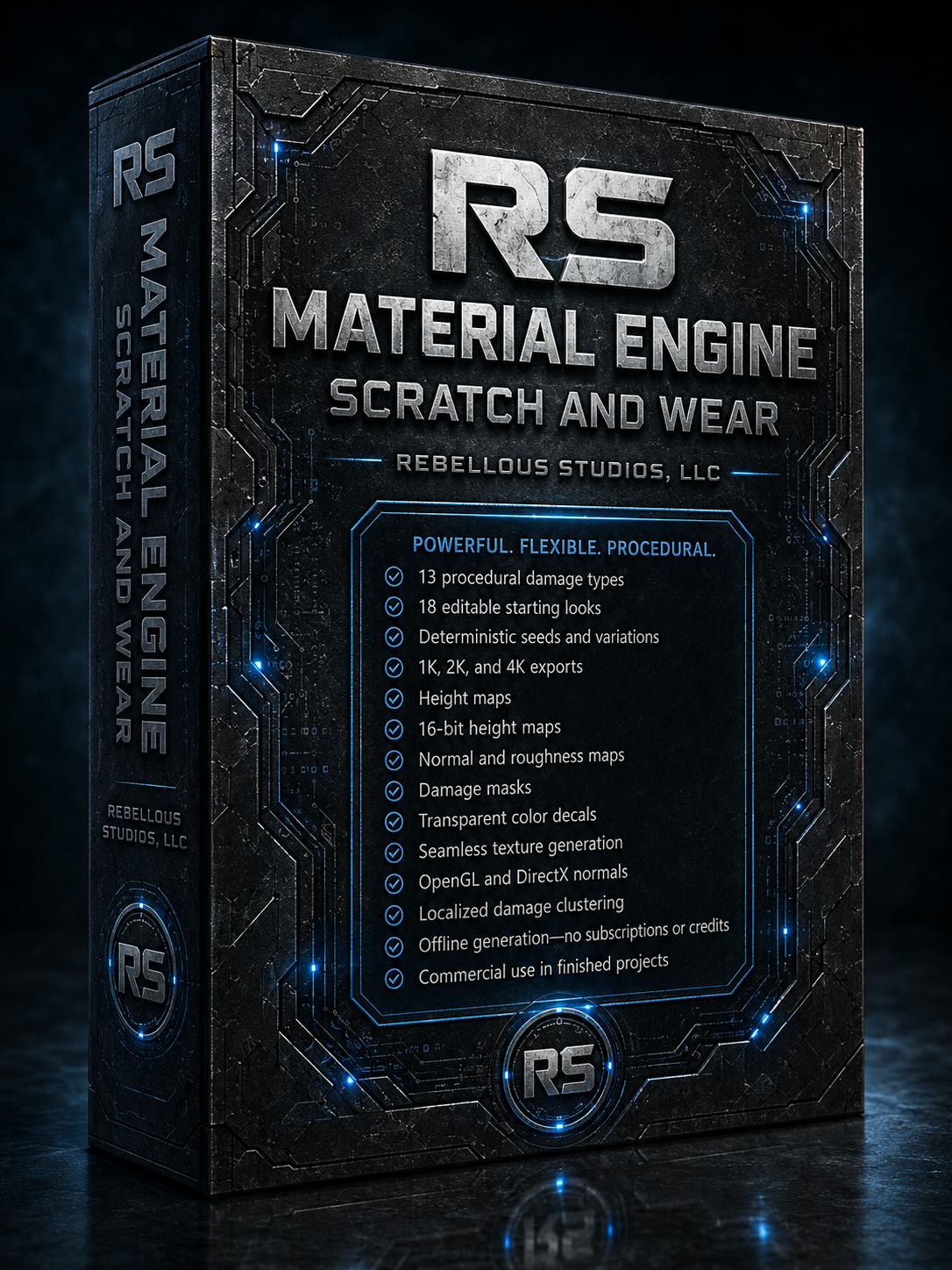 Image 1 of 17
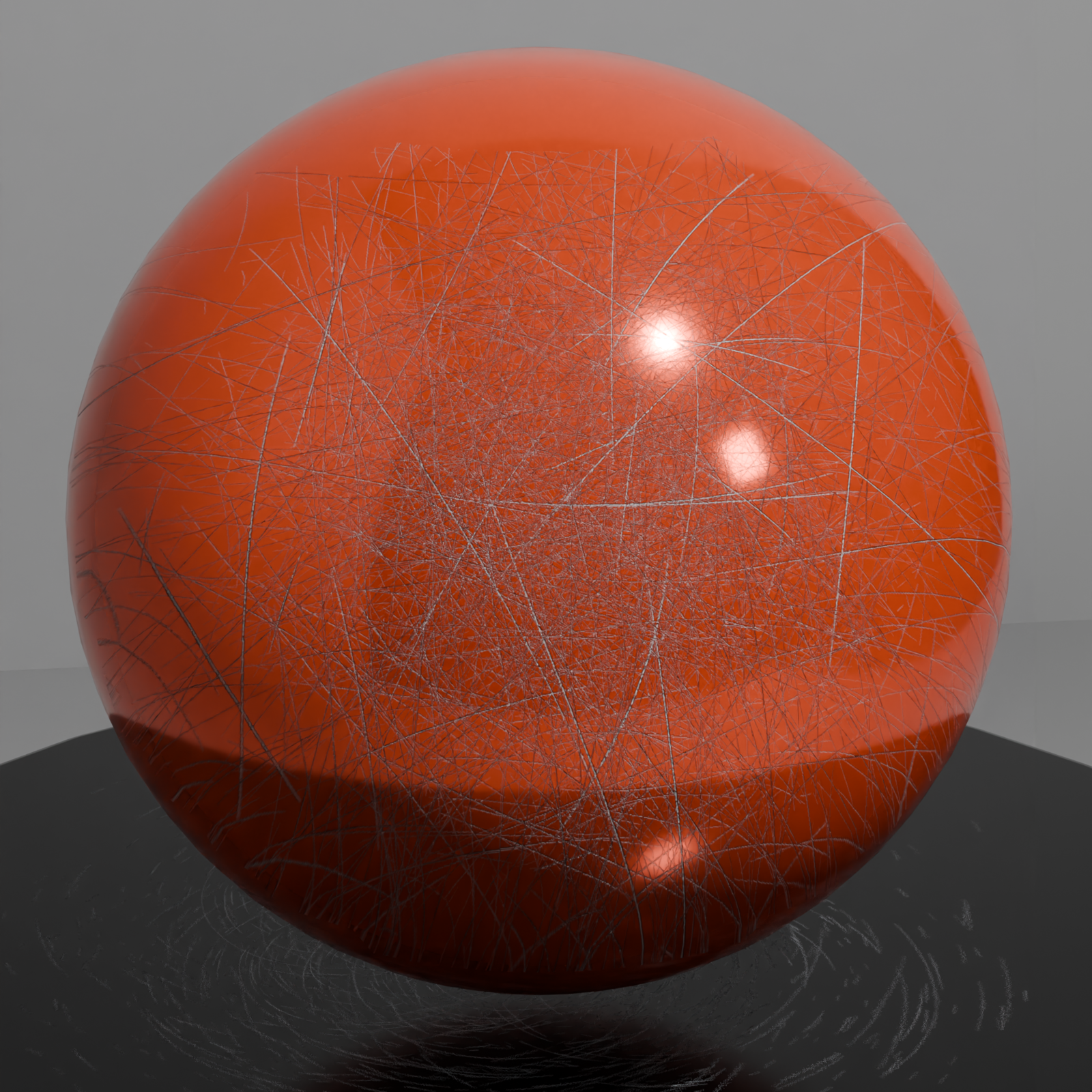 Image 2 of 17
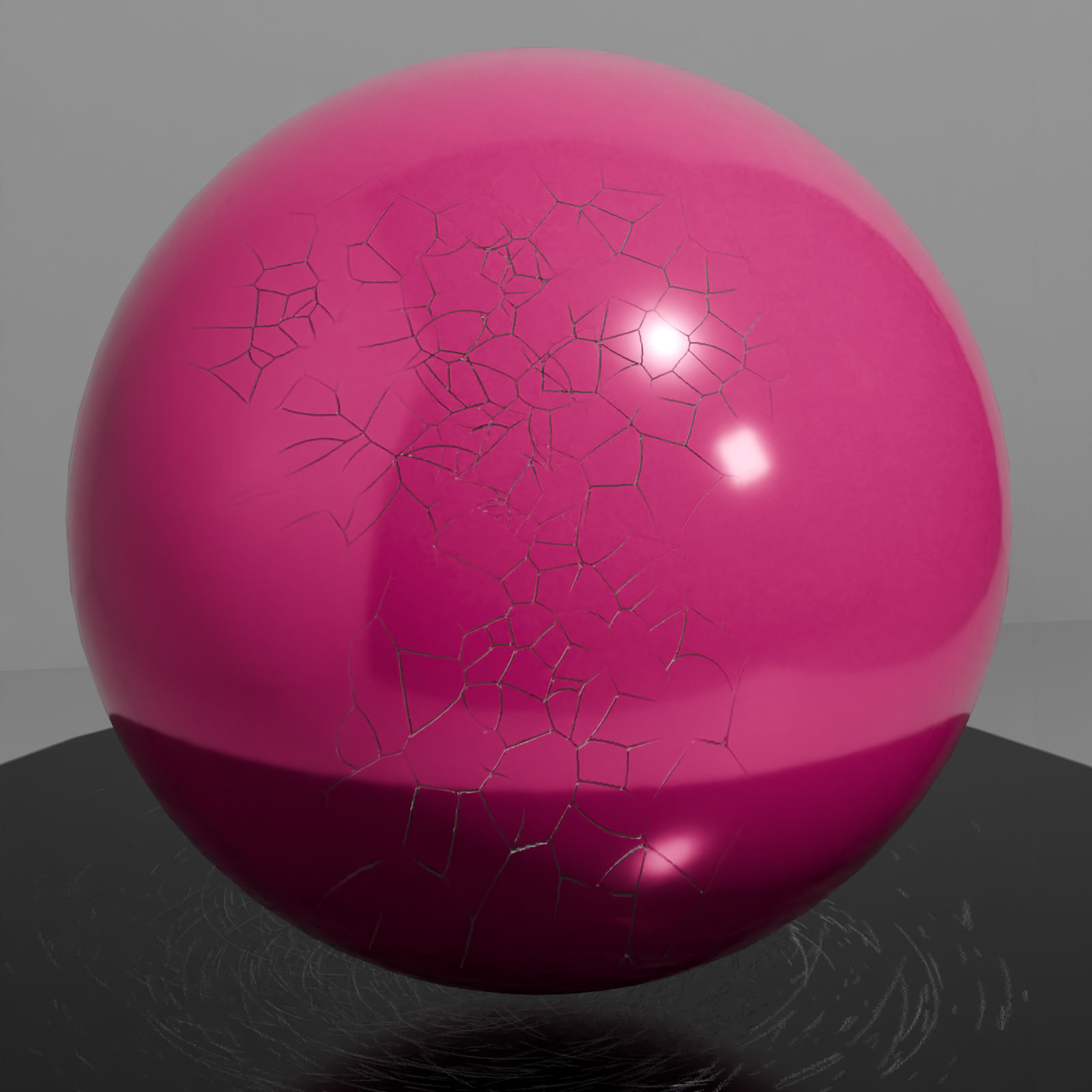 Image 3 of 17
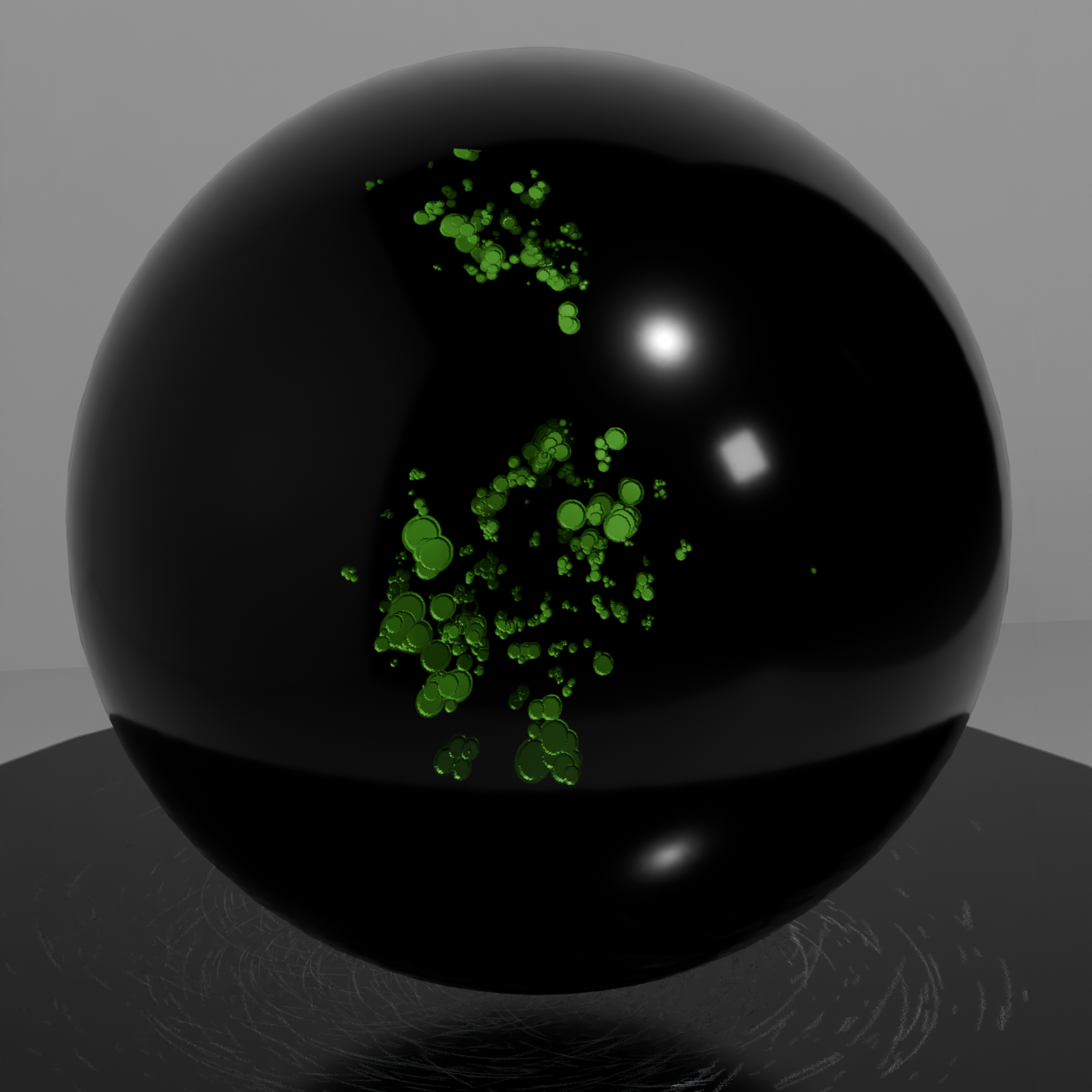 Image 4 of 17
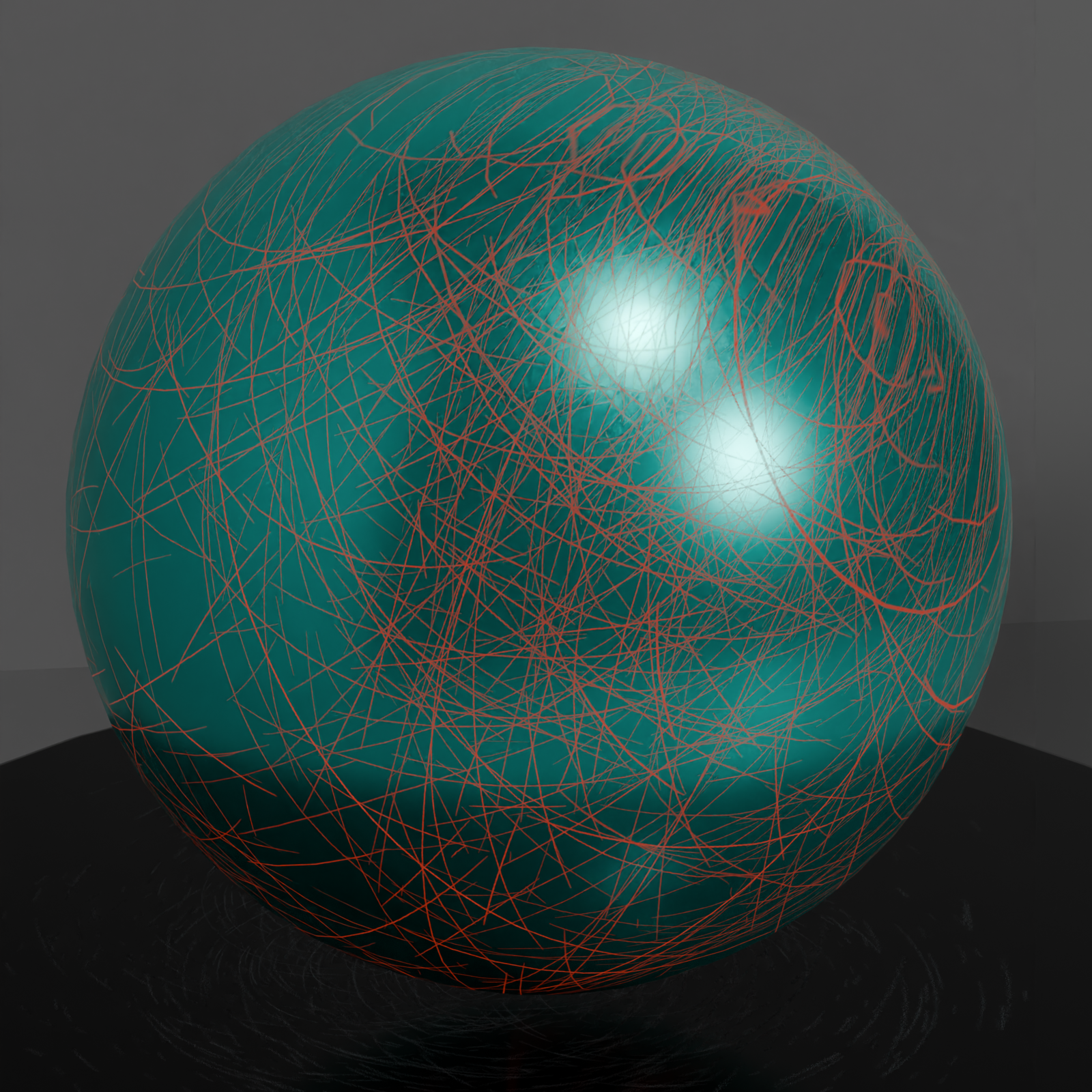 Image 5 of 17
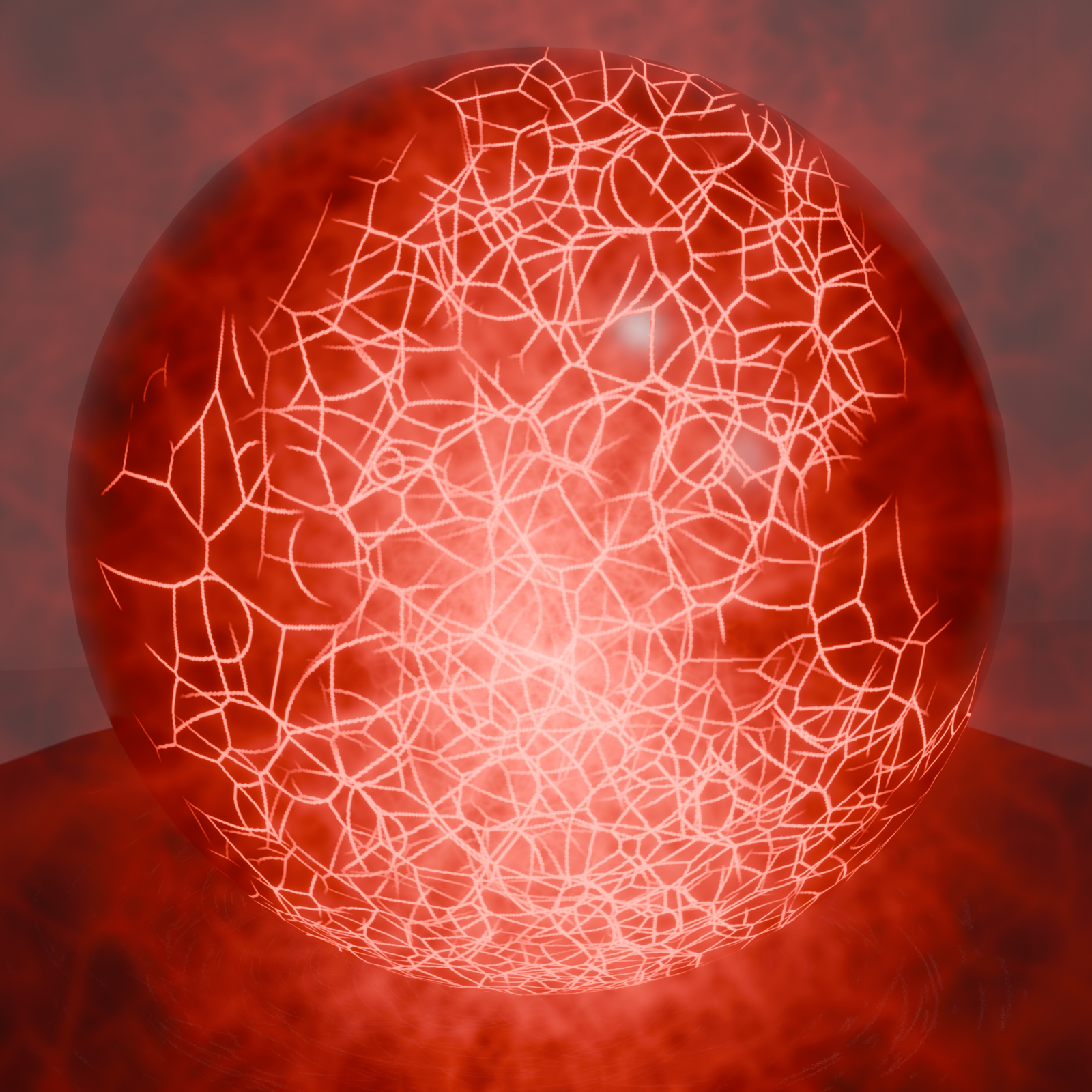 Image 6 of 17
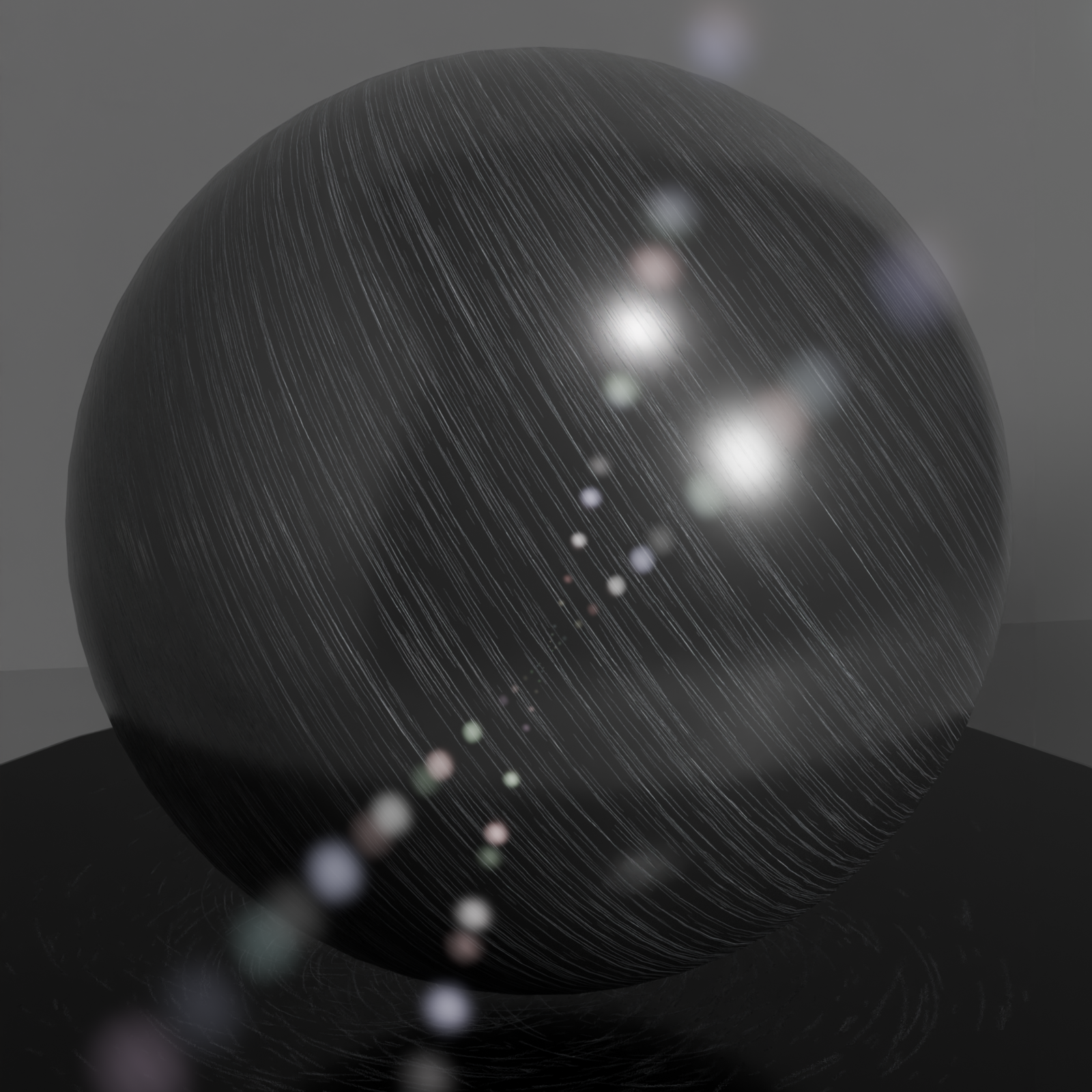 Image 7 of 17
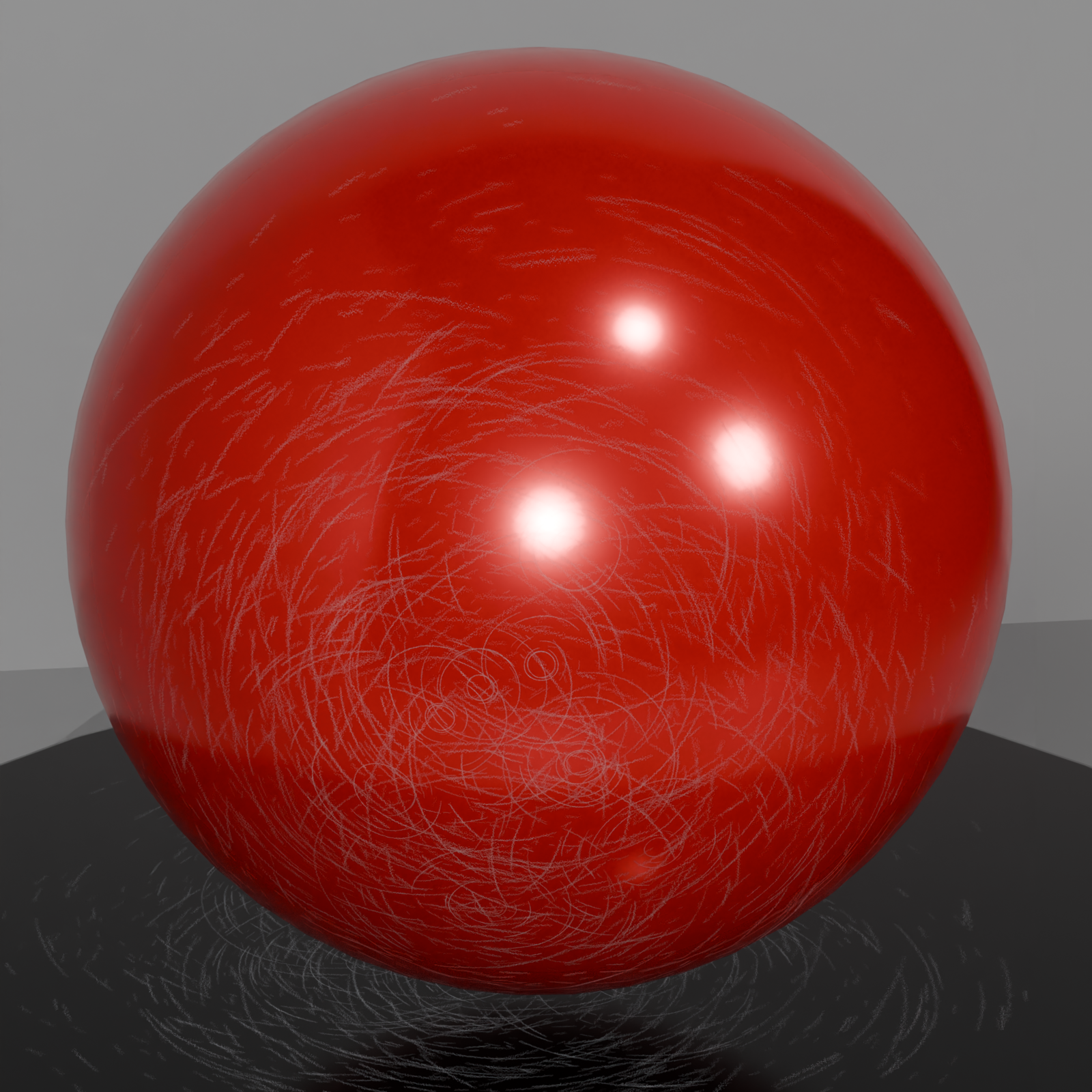 Image 8 of 17
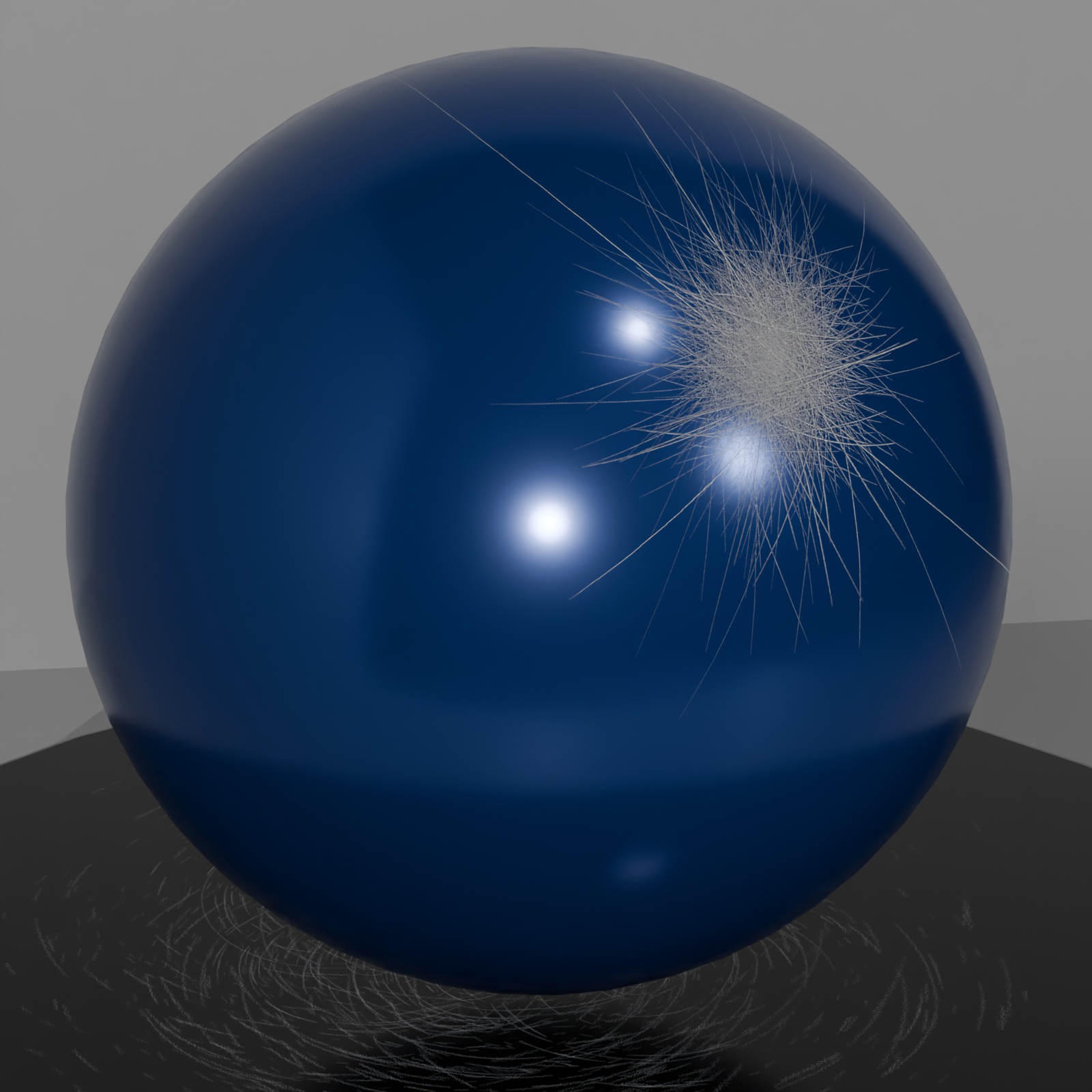 Image 9 of 17
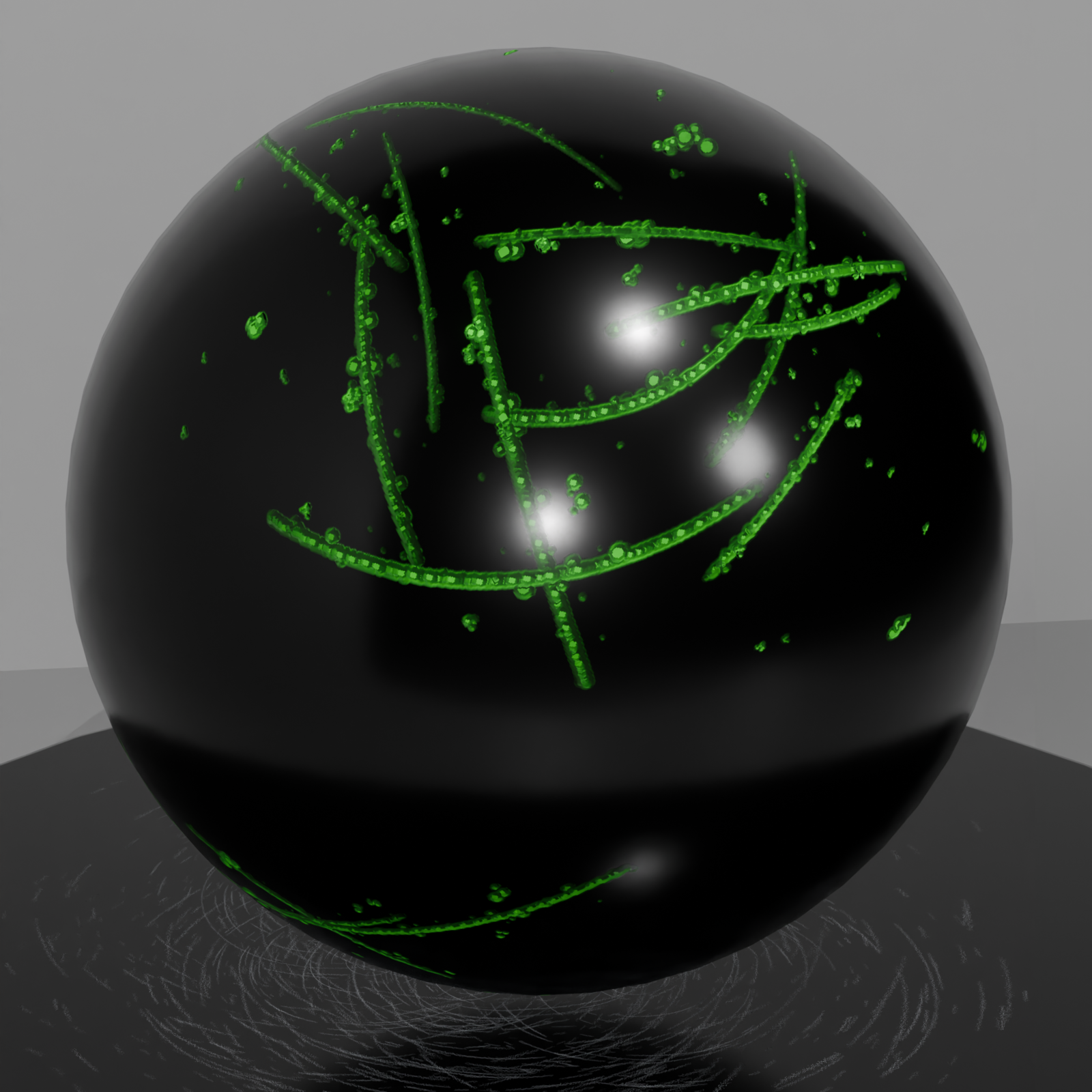 Image 10 of 17
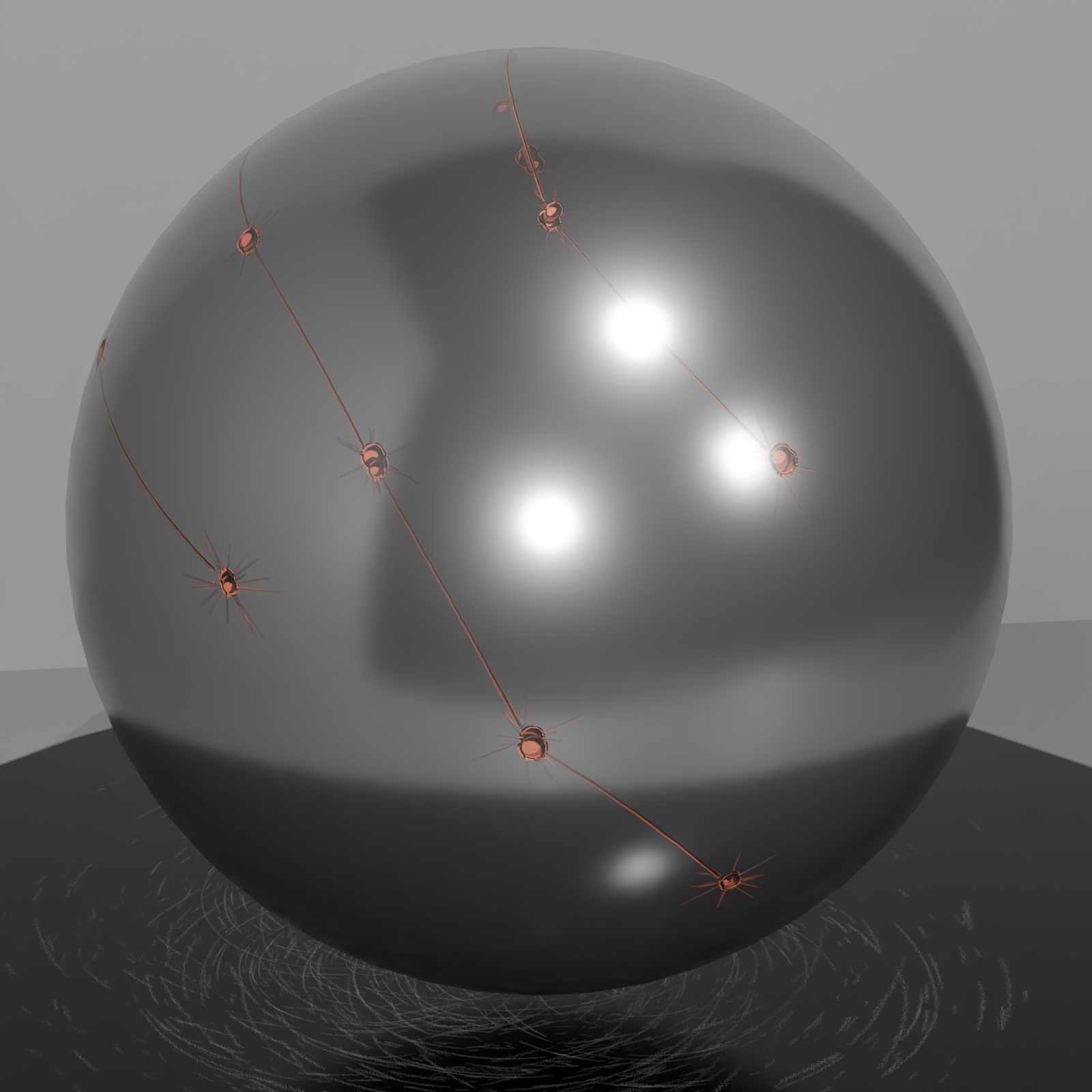 Image 11 of 17
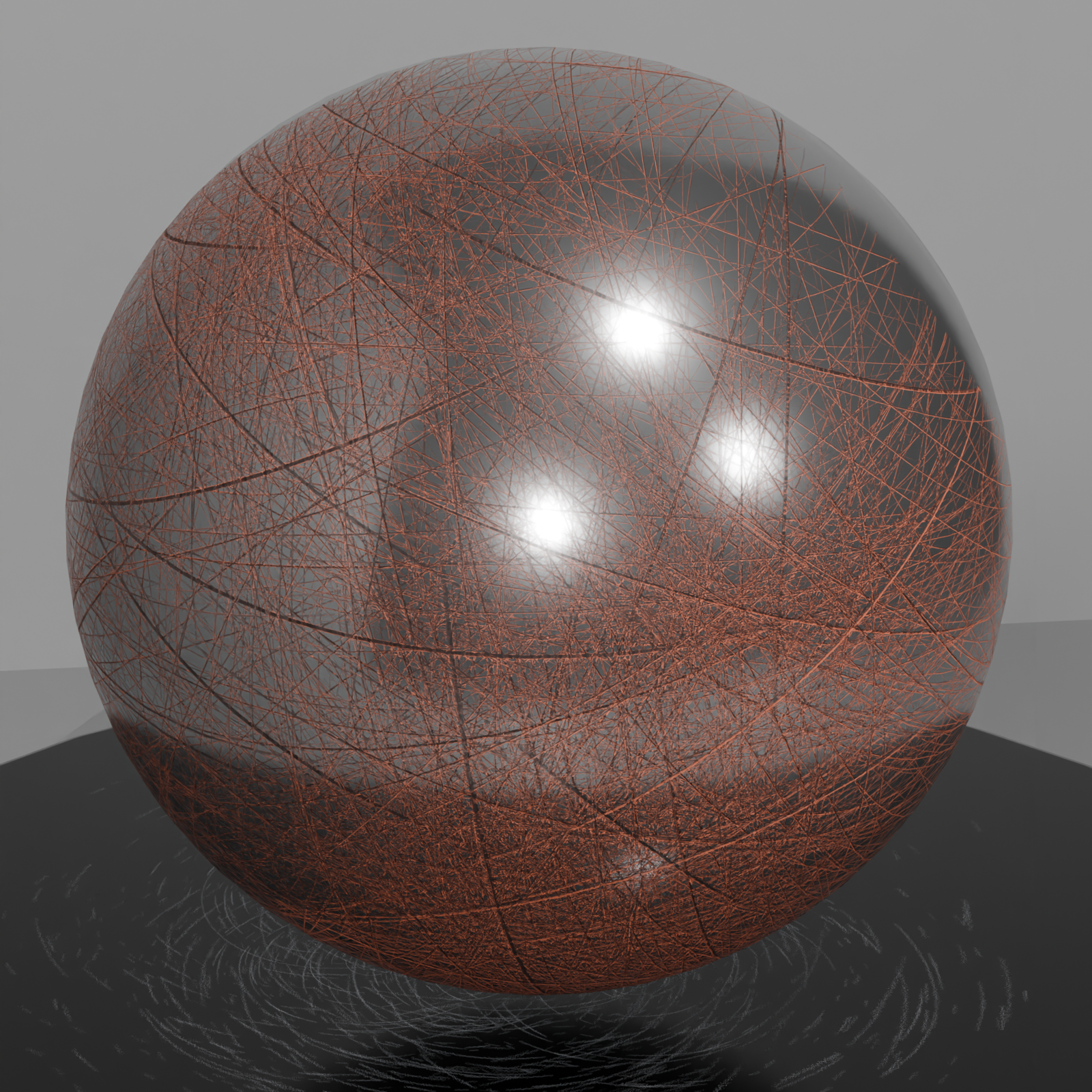 Image 12 of 17
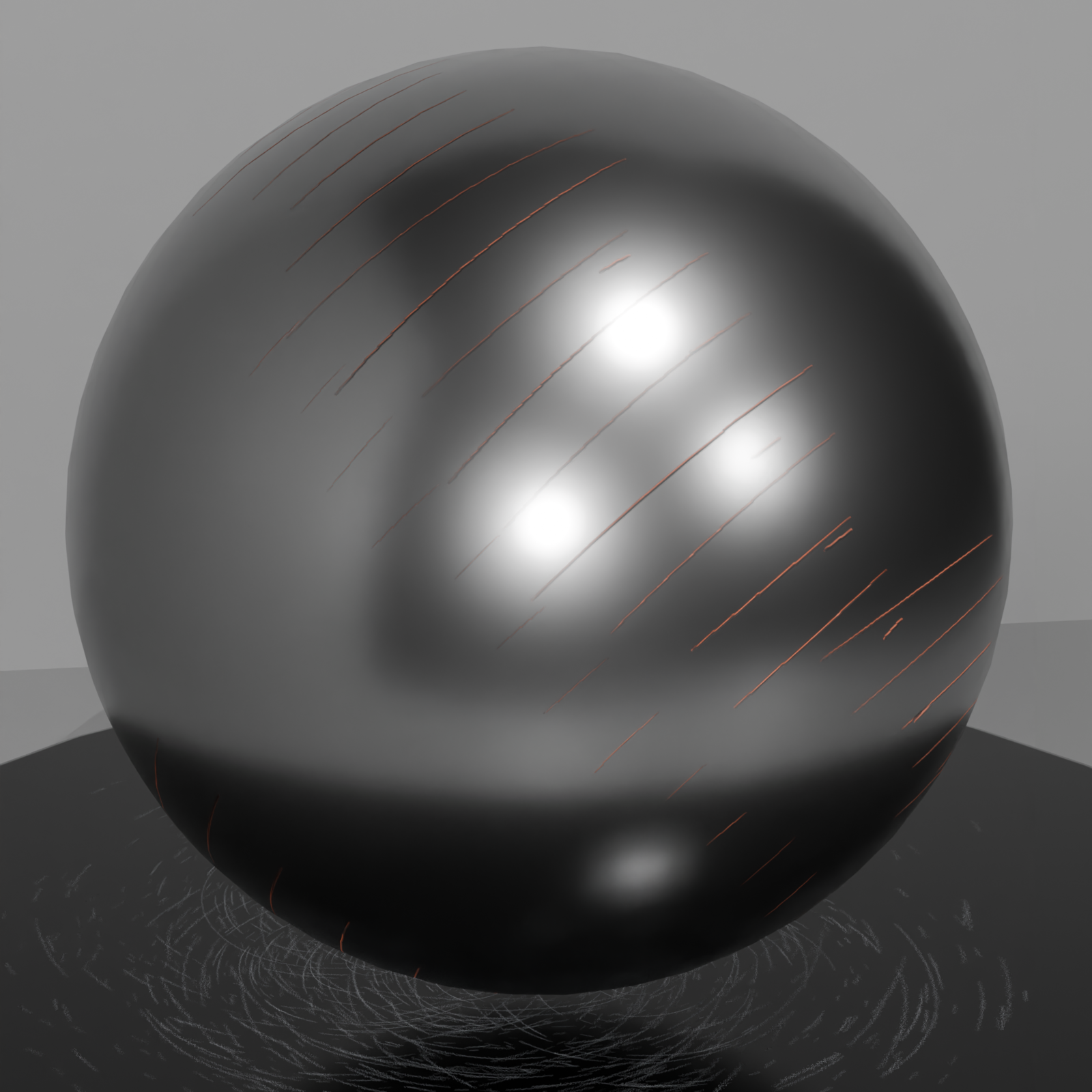 Image 13 of 17
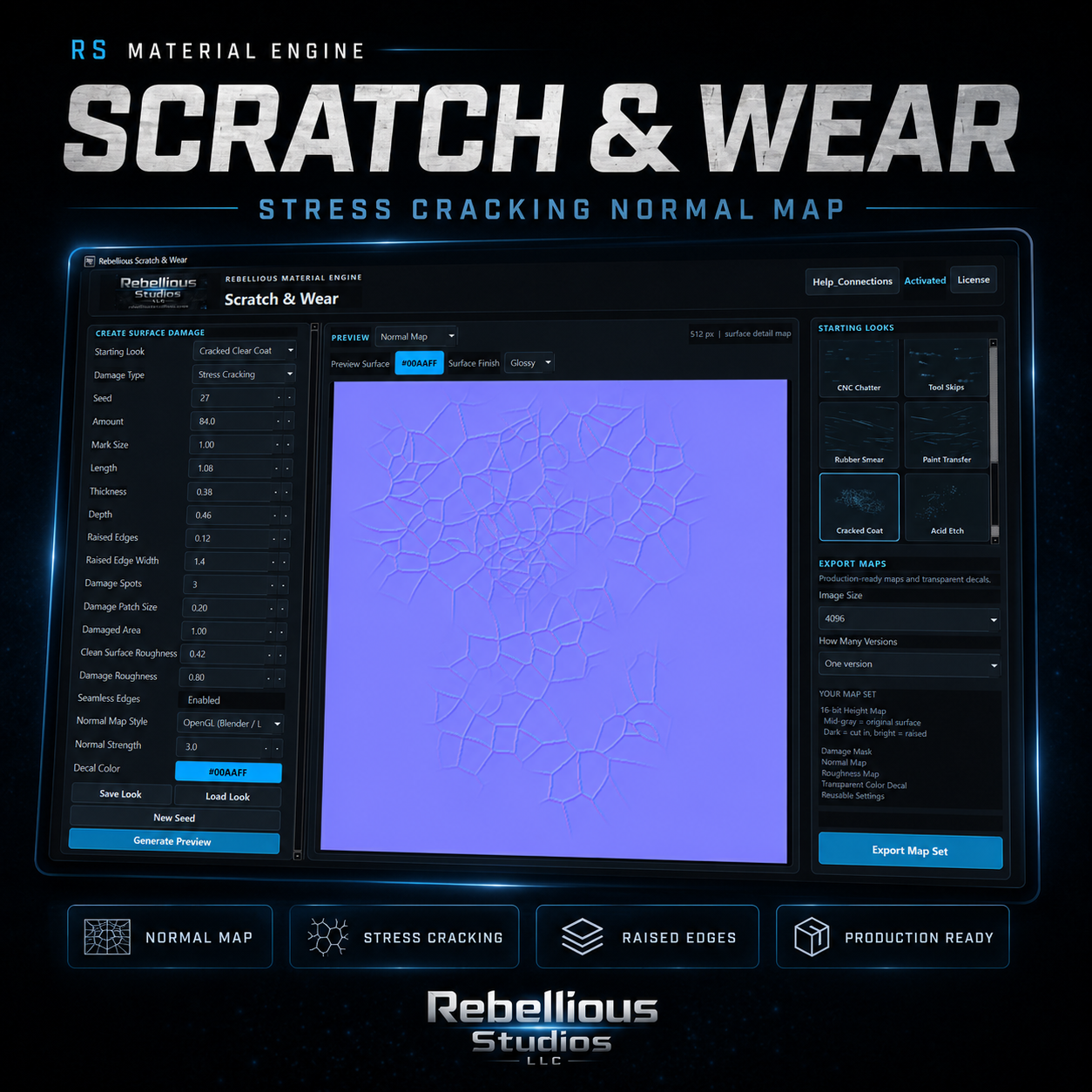 Image 14 of 17
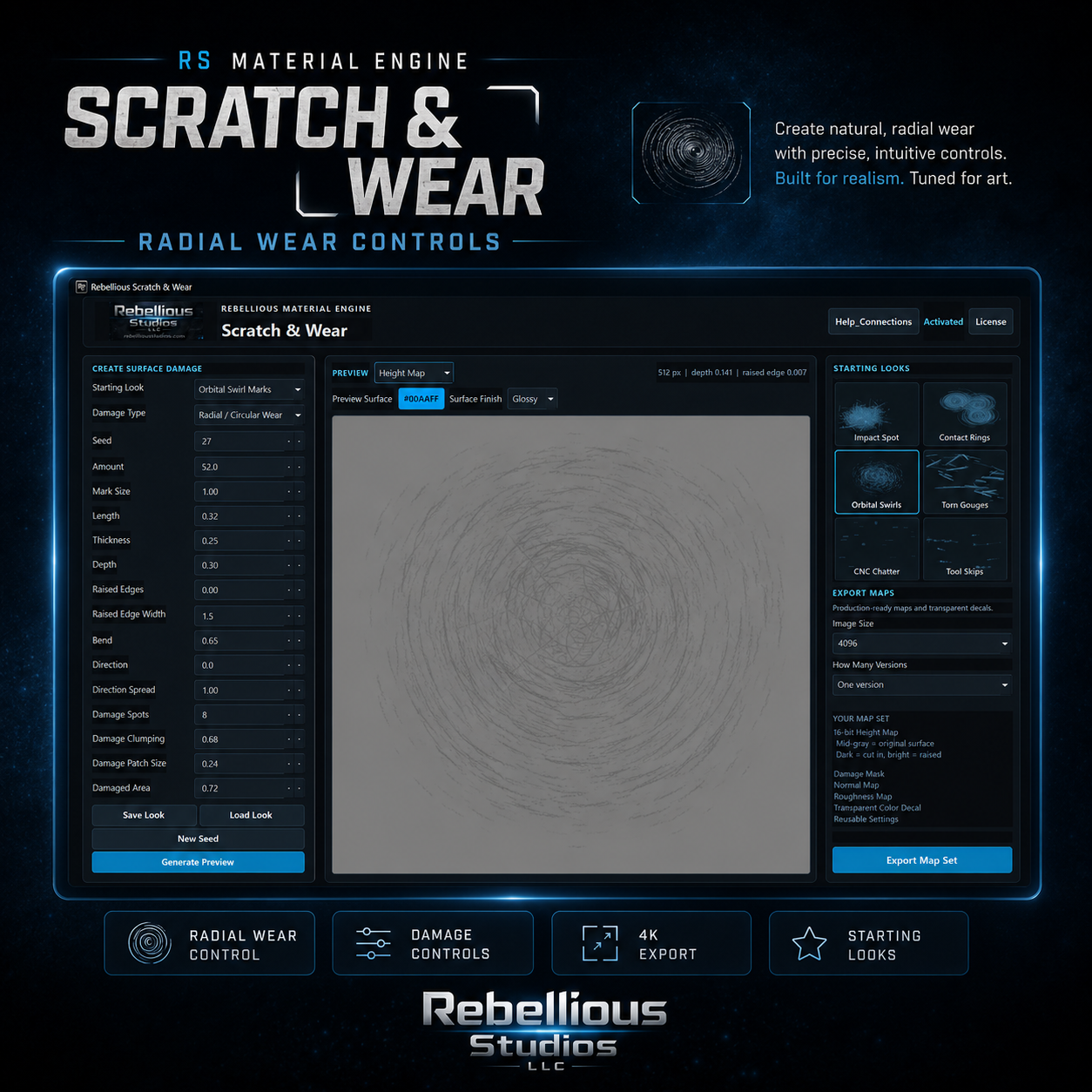 Image 15 of 17
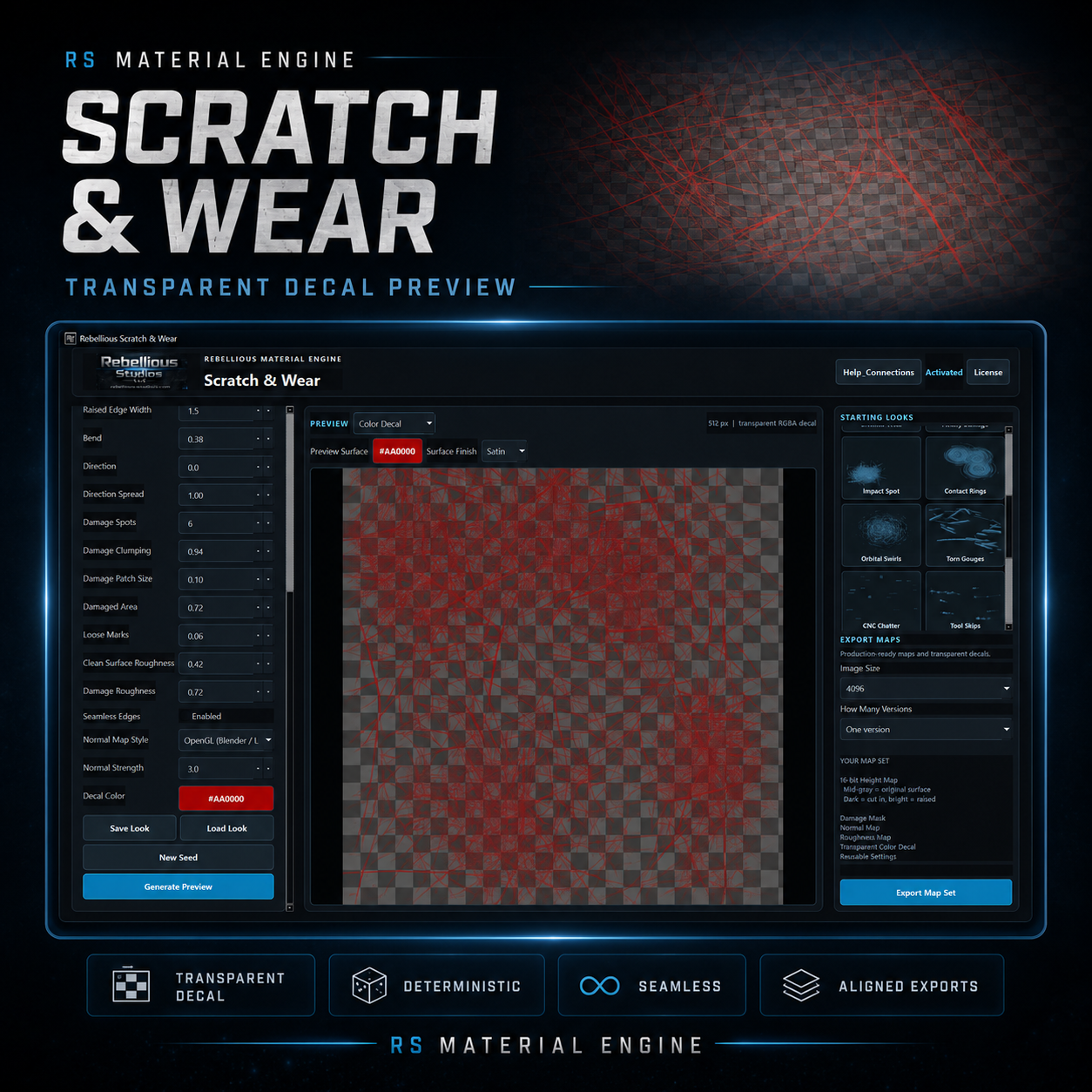 Image 16 of 17
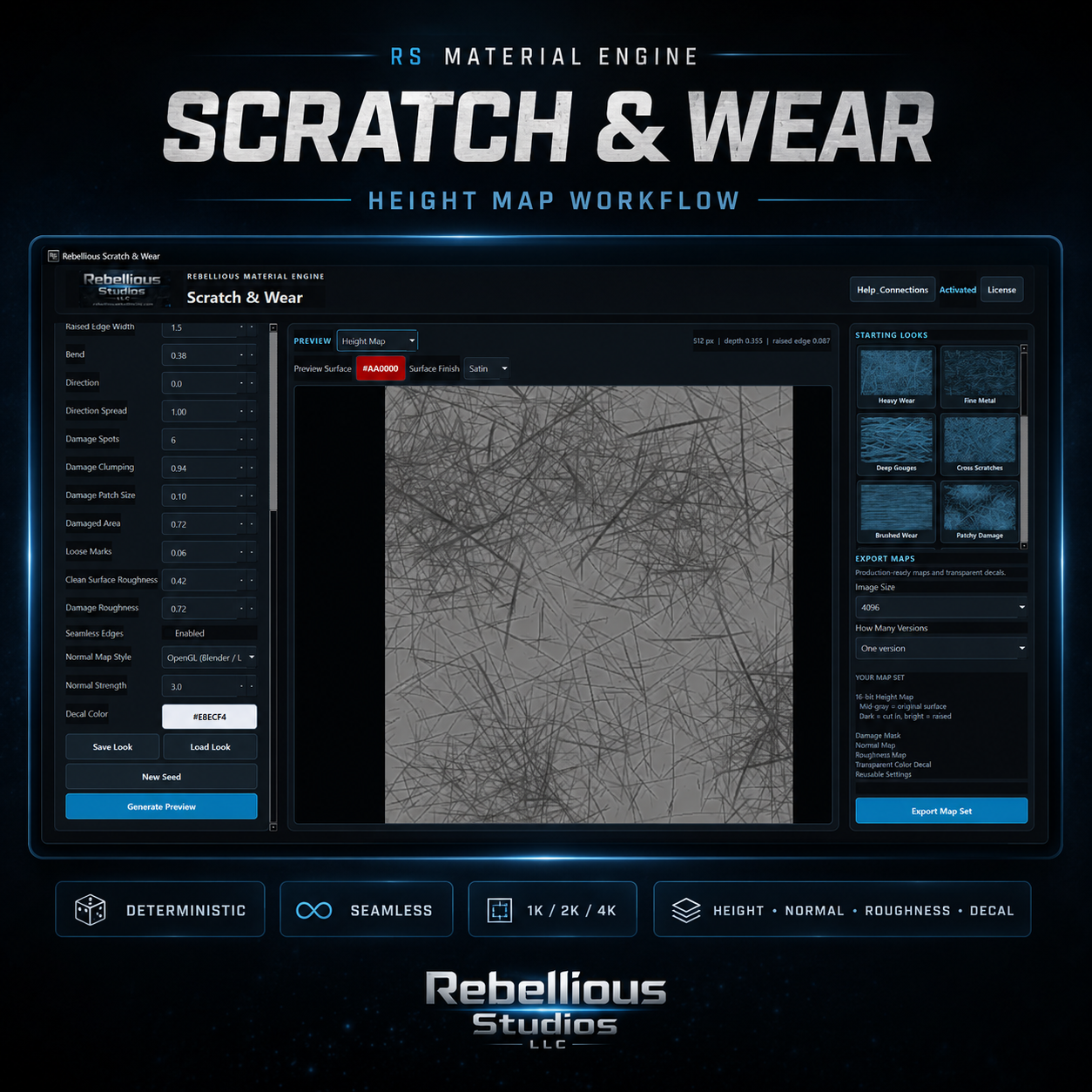 Image 17 of 17